
Europe needs people who understand frontier AI
The Talos Fellowship is for recent graduates and professionals a few years into their careers who want to work in European AI governance. Learn how Europe governs frontier AI, publish your own policy work, meet the people shaping the field and build hands-on experience.
Applications close on 6 December 2026.

“The Talos Fellowship opened doors for me in AI policy and taught me how EU institutions really work.”
How the fellowship works
Every fellow completes the training, an assignment and the Talos Summit. The placement is optional.
-
Training
7 weeks of deepening your European AI governance knowledge. Every week, you learn from our resources, then join the Talos Weekly Seminar to discuss.
See the full curriculum -
Assignment
Write and publish your own frontier AI policy work: a commentary, op-ed, or a policy initiative. The top three receive prizes of up to €750 per person.
-
Summit
1 week in person with your cohort. Learn to pitch policy and plan your career, hear from expert speakers and meet the people working in European AI policy.
-
Placement (optional)
If selected, spend 6 months at a European think tank, organisation or government institution. Talos matches you with a host organisation, and you receive a stipend.
See our partner organisations
Support throughout the fellowship
You work with the Talos team, a writing advisor and your cohort from the first week to the Summit.
- Staff 1:1s – Two 1:1s with the Fellowship team, plus extra calls when you need them and during the Summit.
- Peer 1:1s – A weekly 30-minute call with a different fellow to discuss the readings and your assignment.
- Writing advisor – Three 30-minute sessions with a writing advisor to sharpen your assignment.
- Peer feedback – Structured feedback from your cohort in selected seminars and on your drafts.
- Slack – A Slack space for your cohort and the Talos team.
- Alumni network – Access to the Talos alumni network.
What to expect
Timeline for the Spring 2027 cohort
Applications
6 Nov – 6 Dec 2026Applications open for the Spring 2027 cohort.
Selection
By 4 Feb 2027Final decisions on applications.
Training
24 Feb – 10 Apr 2027Online seminars, 1:1s and the assignment.
Summit
10 – 16 Apr 20271 week in person.
Placement
Apr – Sep 2027Optional, 6 months at a host organisation.
The Talos Summit
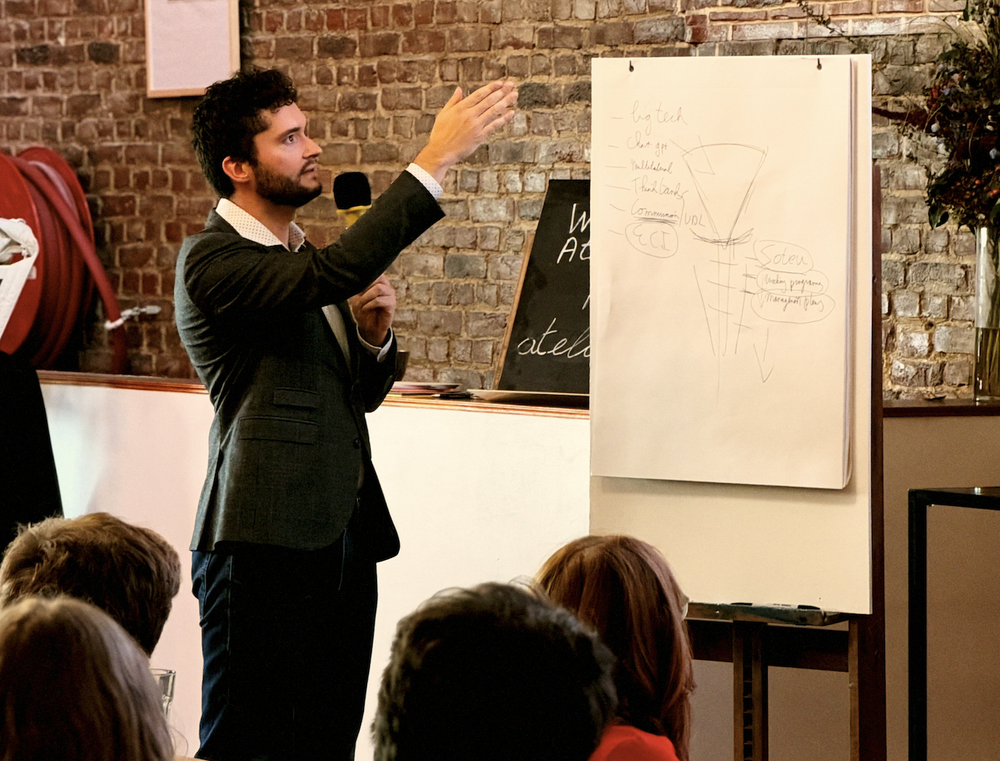
The Summit closes the training phase with 1 week in person.
- Workshops that put your training into practice
- Time to meet your cohort in person
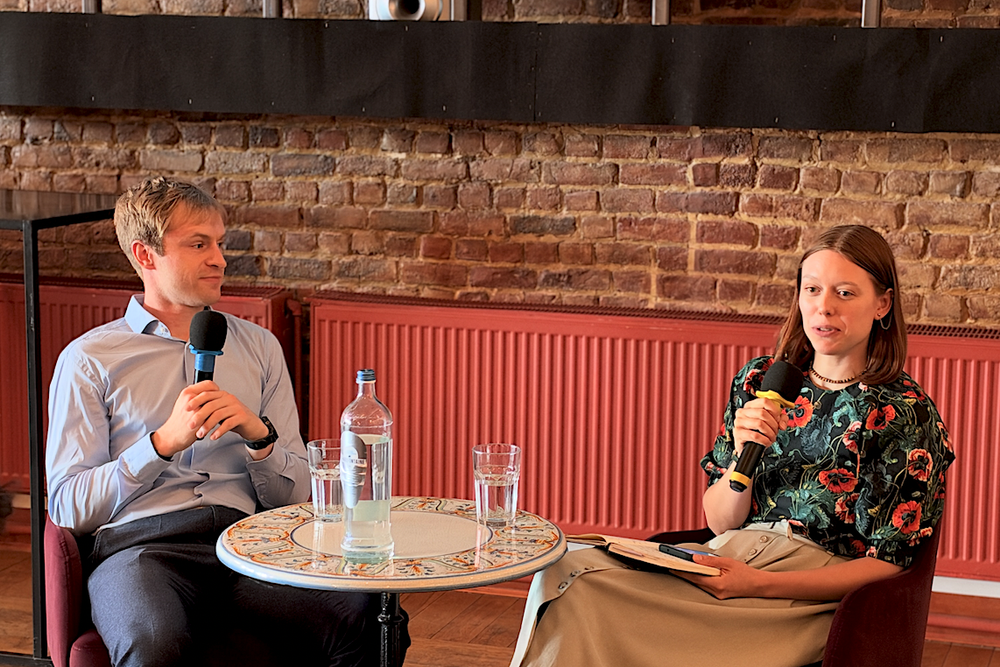
- Talks and Q&As with expert speakers
- Networking with people working in European AI policy
- Extra 1:1s with the Talos team

Apply now if
- You have the right to work in the EU or UK, or a clear path to getting it.
- You already have a foothold in AI governance through work, study or your own projects, and you want to turn it into a career.
- You want a career in policy rather than research.
- You can explain why you want to work on frontier AI in Europe specifically.
- You are motivated by AI safety and want to work on it for the long term.
The Talos Fellowship may not be for you if you're further into your career and already have experience in policy or a related field. In that case, take a look at the Policy Leaders Programme.
Applications close on 6 December 2026. Read more about the application process here.
FAQs
About
What is the Talos Fellowship?
Europe needs people who understand frontier AI and can shape its direction. The Talos Fellowship is a European AI governance fellowship that prepares a new generation of European AI policy professionals. Over 7 weeks of training and the Talos Summit, fellows build expertise in European AI governance, publish their own policy work and join a community of fellows and alumni. Fellows who want hands-on experience can also take an optional, paid placement at a European AI governance organisation.
How is the Fellowship structured?
All fellows complete the training and attend the Talos Summit. The paid placement is an optional addition.
- Training: 7 weeks of weekly reading and discussion in the Talos Weekly Seminar, 1:1s with the Talos team and a writing advisor, and an assignment.
- Talos Summit: 1 week in person, at the end of the training.
- Placement (optional): If selected, spend 6 months at a partner organisation, with a stipend.
What is the difference between the Talos Fellowship and the Policy Leaders Programme?
The Talos Fellowship is for people who are excited about a career in AI governance, are early in their own career and want to accelerate it. The Policy Leaders Programme is for professionals with at least 8 years of relevant experience who want support to transfer that experience to a career in AI governance.
Is the Talos Fellowship remote?
The Fellowship combines remote and in-person elements:
- Training: remote, through the Talos Weekly Seminar.
- Talos Summit: in person in Brussels, 1 week, attendance required.
- Placement (optional): in person. Most placements are in Brussels, with limited options in London, Paris, Geneva and Stockholm. Remote placements may be considered in exceptional cases.
How long is the Talos Fellowship?
- Training: 7 weeks, part-time. The time commitment is 10 hours per week during training and full-time during the 1-week Summit.
- With a placement: about 8 months in total for the Spring 2027 cohort, from training in February to the end of the 6-month, in-person placement in September.
When does the Fellowship start?
The Talos Fellowship runs twice per year. The Spring cohort starts in February, and the Autumn cohort starts in August.
How much time do fellows have to dedicate?
The Fellowship includes part-time and full-time components:
- Training: part-time, 10 hours per week
- Talos Summit: full-time, 1 week
- Placement (optional): 6 months, with a preference for full-time. Part-time is possible.
Is the Talos Fellowship paid?
Training and the Summit are not paid. Fellows who take a placement receive a monthly stipend of about €3,000. We may adjust it for higher living costs depending on where the placement is based.
Will costs be covered for the Talos Summit in Brussels?
Yes. All travel, accommodation, and breakfast and lunch meal costs are fully covered.
Will I meet the other fellows?
Yes. You meet your cohort every week in the Talos Weekly Seminar and in a weekly 30-minute 1:1 with a different fellow. Each week, one pair presents a claim to the cohort in a Thought of the Week section. You can collaborate on your assignment in a group of up to 3, and you meet everyone in person at the Talos Summit. Our alumni network arranges monthly dinners in Brussels and other European AI governance hubs, and we host monthly online meet-ups to discuss the placement experience and offer support.
What do you mean by “European” AI policy? Does this include my country?
Our definition of Europe includes member countries of the European Union and non-EU member states, like the UK, Iceland, Liechtenstein, Switzerland and Norway.
Why are you focusing on Europe and European citizens?
One of the goals of this programme is to build a strong network of policymakers working on frontier AI across the European ecosystem. We therefore strongly prefer candidates with European work rights, as many of the most important roles in European institutions are open only to citizens.
We do not sponsor work visas, so you need the right to work in the EU or UK, or a clear path to getting it. Outstanding candidates who are still obtaining work rights may be considered, provided they intend to be physically located in Europe, and in some cases we can defer your placement by one year.
If you are not doing a placement, you do not strictly need work rights in Europe, but we do care about your engagement with European AI governance.
Who is funding the Talos Fellowship?
We have received support from Coefficient Giving, EA Funds and a number of independent donors. We accept general financial contributions of any amount. If you would like to help support our work, please get in touch or donate directly here.
How many fellows are usually in a cohort?
We aim to have about 20 fellows in each cohort.
What do you do to support diversity in AI governance?
AI governance will shape everyone’s future, so it should not be built by a narrow few. Talented people from underrepresented backgrounds face real barriers to entering the field, and we are working to lower them. We strongly encourage anyone who is unsure whether they belong to apply. Once you are a fellow, we invest in your success through support from the Talos team, a writing advisor and your peers, and for placements, a strong host-organisation match.
Applications
What does the application process consist of?
Application form and CV, a short assignment, and an automated interview. The final stage is a live remote interview with a Talos team member. If you are selected for a placement, you will also have an interview with the host organisation.
When will I hear back about my application?
All applicants should expect to hear whether they have progressed to the second stage of the application process about 4 weeks after the application deadline.
When will I know if I’ve been accepted?
Participants in the Spring 2027 cohort will be selected by early February 2027. For the Autumn cohort, we usually select candidates by the end of July.
Is there an age limit to do the Fellowship?
There is no age limit.
I’m based in ______, can I apply?
If you want a placement, your current location does not matter, as long as:
- you are open to moving to Brussels or another placement location for your in-person placement, and
- you have, or can obtain, the right to work in the EU or the UK without the support of this programme, because we cannot sponsor visas.
If you do not want a placement, you do not need the right to work in Europe. We focus on European AI policy, so a link to Europe is essential for admission. We generally do not accept applicants based outside Europe, unless it is an exceptionally relevant opportunity, e.g., 2–5 years of AI lab experience or policy or lobbying experience in the US or in relevant middle-power countries.
Do I need to have a specific degree to apply?
Candidates should have at least an undergraduate degree. We are open to applicants from any discipline, so please do not let your academic background keep you from applying.
Can I apply if I’m still at university?
We are open to accepting fellows who are still studying and expect to graduate within six months of finishing the Talos Fellowship. However, we prefer candidates who have finished university and are prepared to start working full-time once the programme ends.
What if I’m not sure a career in AI policy is right for me?
We aim to support people who have already done some initial exploration and have a reasonable sense that AI policy could be a good fit for them. You do not need to be certain, but we expect you to have tested your interest before applying, for example through conversations with people in the field, reading policy papers, free courses (such as BlueDot or ML4Good), attending events or volunteering in policy-relevant settings. In your application, you will explain your reasoning, including what you would do instead.
How can I prepare for the application process?
We suggest developing your understanding of AI governance in Europe, from a basic overview of AI risks to how EU institutions work, and your motivation to pursue a career in this field.
How are applications processed? Who will view my application?
Applications are visible to members of the Talos team and may, in some cases, be shared with trusted advisors. If you want a placement, we also share parts of your application (for example, your CV) with your potential host organisation for their assessment.
Placements
Is the placement part of the Talos Fellowship?
Every fellow completes the training and the Summit. The placement is the third component, and it’s optional: when you apply, you choose whether you’d like to be considered for one. Placements are limited, so we consider your request as part of the selection process.
Where could I be placed?
Placements are at well-respected think tanks and policy organisations active in European AI governance. Examples include the Centre for European Policy Studies (CEPS) and The Future Society (TFS). See all our partner organisations on the Partners page.
Can I find my own placement?
Talos brokers placements with its partner organisations. We match you with a host organisation, and you interview with the host before the placement is confirmed. If you want to be placed at a specific organisation, speak with us and we will see if this is something we could facilitate.
How do I know the placement will be beneficial for my career and not just a junior “coffee-run” role?
We have agreed with all placement institutions that fellows will work on relevant and interesting topics, and we aim to give fellows useful experience to advance their careers in this field. To check the fit during placements, we regularly stay in touch with past fellows and host organisations to gather feedback on their experiences.
Will I officially be an employee?
No. Fellows are not onboarded as employees by their host organisation. They receive their monthly remuneration as an educational stipend directly from Talos Network. In some European countries, this stipend is tax-free. We encourage you to look into your local tax obligations (see the next question).
What is the legal setup of the Talos Fellowship placement?
This fellowship is structured as an educational programme, not employment. Legally, the Fellowship is classified as public and vocational education under German charity and tax law (§ 52 AO), supported through a tax-exempt stipend under § 3 Nr. 44 EStG (Germany).
In most cases, this stipend is treated as tax-free income under the applicable rules in the fellow’s country of residence. Fellows remain responsible for arranging their own health insurance. EU health insurance (EHIC) can typically be used for up to six months.
When do I receive the stipend?
Stipends are paid at the end of each month during the placement. Different payment intervals are possible.
Is it possible to extend the placement?
Yes, though it is not the norm. You can request an extension of up to 6 additional months after 3 months in your placement, if your host organisation agrees. Talos reviews all extension requests and decides at its discretion. Most placements end after 6 months.
Can the placements turn into real jobs?
Some previous fellows have been hired by their host institutions. However, completing a placement does not oblige the host organisation to offer a job. It depends on the fellow’s fit, performance and the host organisation’s hiring needs. Placements offer you a network, a community and valuable career paths for work within European institutions.
Subscribe to Talos Network’s newsletter
Stay up to date with Talos news and our programmes.